
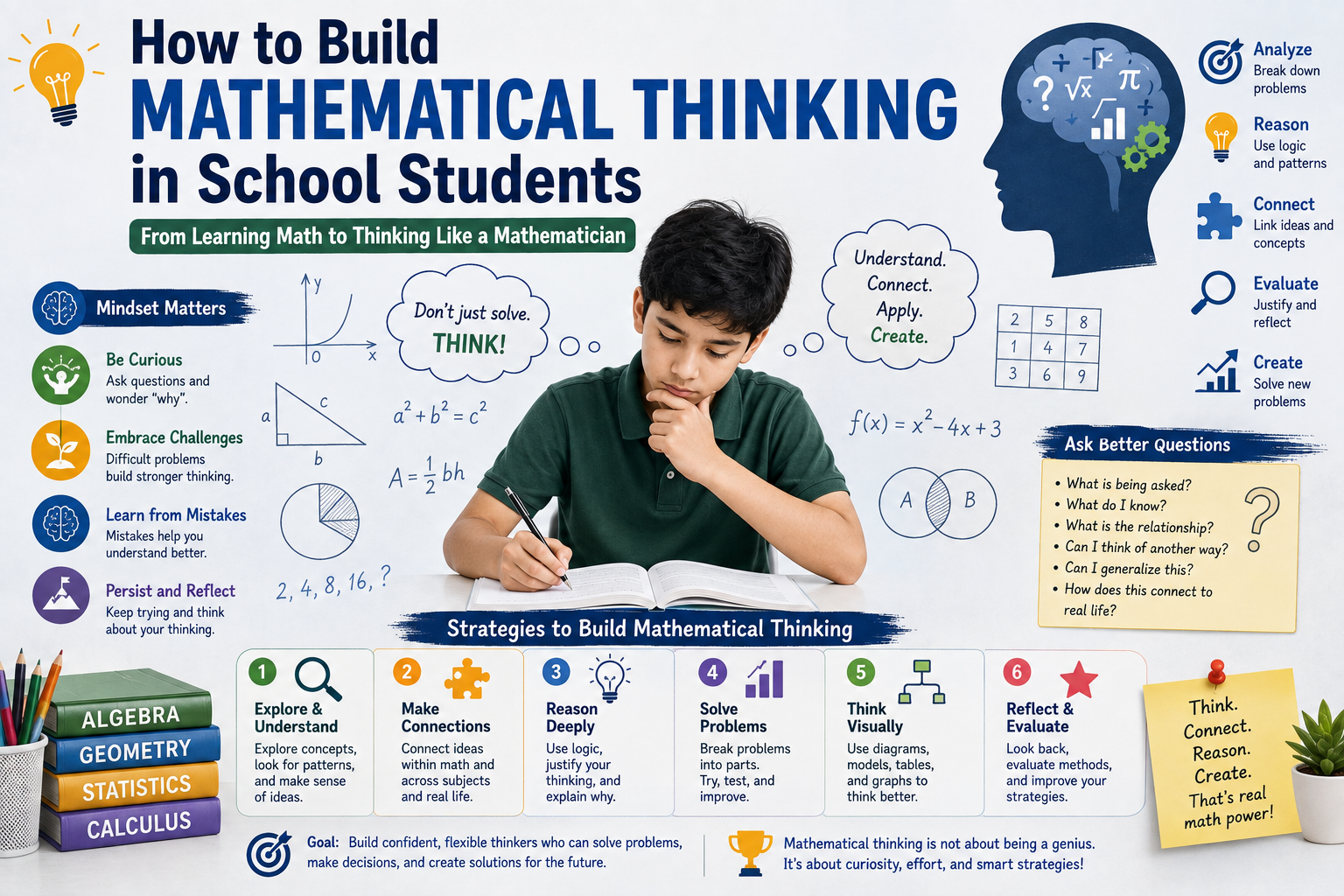
Mathematics is much more than numbers, formulas, and calculations. It is a powerful way of thinking that helps students analyze information, recognize patterns, make logical decisions, solve problems, and explain their ideas. In the modern world, where information and technology are changing rapidly, mathematical thinking has become an essential skill for school students. The goal of mathematics education should therefore not be limited to producing correct answers; it should help students become curious, logical, creative, and independent thinkers.
What Is Mathematical Thinking?
Mathematical thinking is the ability to use reasoning, logic, patterns, relationships, and evidence to understand and solve problems. A mathematically thinking student does not simply ask, “What is the answer?” but also asks, “Why is this answer correct?” “How did I reach it?” and “Is there another way to solve the problem?”
For example, when students learn multiplication, they should not only memorize multiplication tables. They should understand multiplication as repeated addition, groups, arrays, or relationships between numbers. Such understanding enables them to apply multiplication when faced with unfamiliar problems.
Mathematical thinking also includes estimation, comparison, reasoning, pattern recognition, logical argument, and the ability to identify whether an answer makes sense.
Encourage Students to Ask “Why?”
One of the most effective ways to develop mathematical thinking is to create a classroom where students are encouraged to ask questions. Instead of presenting every mathematical rule as something that must simply be memorized, teachers should encourage students to explore why a rule works.
For instance, rather than only giving students the formula for the area of a triangle, a teacher can ask them to compare a triangle with a rectangle or parallelogram and discover the relationship themselves. When students discover a mathematical relationship, they are more likely to understand and remember it.
Questions such as “What do you notice?”, “Why do you think this happens?”, “Can you prove it?”, and “Can you find another method?” encourage higher-order thinking.
Use Problem-Based Learning
Routine exercises are useful for developing basic skills, but students also need opportunities to solve non-routine and real-world problems. A problem-based approach can make mathematics meaningful.
For example, students can be asked to design a small school garden within a fixed area and budget. They may need to calculate measurements, compare prices, estimate costs, and decide how to use available space. Such activities combine mathematical knowledge with decision-making and creativity.
Real-life problems also show students that mathematics is not simply an examination subject. It is a practical tool for understanding the world.
Encourage Multiple Solutions
There is often more than one way to solve a mathematical problem. Teachers should encourage students to explore different methods instead of always expecting one standard procedure.
When students compare two or three solutions, they begin to understand the advantages and limitations of different strategies. They also learn to explain and defend their reasoning. This strengthens both mathematical communication and logical thinking.
A classroom discussion might therefore focus not only on “What is the answer?” but also on “How did you solve it?” and “Why does your method work?”
Make Mistakes Part of Learning
Many students become afraid of mathematics because they believe that making mistakes means they are not good at the subject. This mindset can prevent them from attempting challenging problems.
Teachers should create an environment where mistakes are treated as opportunities for learning. When a student gives an incorrect answer, the teacher can ask, “Where might this reasoning have changed direction?” rather than simply saying, “That is wrong.”
Analyzing incorrect solutions can be particularly valuable because students learn to identify assumptions, calculation errors, and gaps in reasoning. In this way, mistakes become part of mathematical investigation.
Develop Higher-Order Thinking
Higher-order mathematical thinking requires students to move beyond remembering and applying formulas. They should gradually learn to analyze, evaluate, justify, and create.
For example, instead of asking students only to calculate the answer to a problem, teachers can ask them to determine which method is most efficient and explain why. They can also ask students to create their own mathematical problems, find patterns, test conjectures, or prove whether a statement is always true.
These activities develop reasoning and creativity—skills that are valuable far beyond mathematics.
Current Situation: Technology and AI in Mathematics Education
The current educational environment is being transformed by digital tools, online learning platforms, calculators, and artificial intelligence. Students can now obtain explanations and solutions to mathematical questions almost instantly. This creates both opportunities and challenges.
Technology can provide visualizations, interactive exercises, personalized practice, and immediate feedback. AI tools can also offer step-by-step explanations and alternative approaches to problems. However, if students simply copy AI-generated answers without understanding the reasoning, technology may reduce rather than strengthen mathematical thinking.
Therefore, schools should teach students to use technology critically and responsibly. Students should first attempt a problem independently, use digital tools to check or explore their reasoning, and then explain the solution in their own words. In the AI era, the ability to question an answer and verify whether it makes sense is becoming more important than simply obtaining an answer.
The Role of Teachers and Parents
Teachers play a central role in developing mathematical thinking. They should act not only as instructors but also as facilitators of exploration and discussion. Giving students sufficient time to think, encouraging different approaches, and asking open-ended questions can transform the learning experience.
Parents can also support mathematical thinking at home through everyday activities. Shopping, cooking, budgeting, measuring, planning journeys, and discussing charts or statistics can become opportunities for mathematical reasoning. Children do not need complicated exercises to develop mathematical thinking; they need regular opportunities to think mathematically.
Conclusion
Building mathematical thinking in school students requires a shift from simply teaching procedures to developing reasoning, curiosity, creativity, problem-solving, and higher-order thinking. Students should be encouraged to ask why, explore different solutions, learn from mistakes, connect mathematics with real life, and use technology thoughtfully.
In today’s rapidly changing world, mathematical thinking is not only useful for passing examinations. It is a foundation for informed decision-making, scientific understanding, technological innovation, and everyday life. The most successful mathematics classroom is therefore not the one where every student memorizes the most formulas, but the one where students learn to question, reason, investigate, and confidently solve problems they have never seen before.
नेपालीमा
विद्यालयका विद्यार्थीहरूमा गणितीय सोच कसरी विकास गर्ने
गणित केवल अंक, सूत्र र हिसाब–किताबको विषय होइन। यो विद्यार्थीहरूलाई सूचना विश्लेषण गर्न, ढाँचा पहिचान गर्न, तार्किक निर्णय लिन, समस्या समाधान गर्न र आफ्ना विचार स्पष्ट रूपमा प्रस्तुत गर्न सिकाउने शक्तिशाली माध्यम हो। सूचना र प्रविधि तीव्र रूपमा परिवर्तन भइरहेको वर्तमान समयमा विद्यालयका विद्यार्थीहरूका लागि गणितीय सोच अझ महत्वपूर्ण सीप बनेको छ। त्यसैले गणित शिक्षाको उद्देश्य केवल सही उत्तर निकाल्न सिकाउनुमा सीमित हुनु हुँदैन; यसले विद्यार्थीलाई जिज्ञासु, तार्किक, सिर्जनशील र आत्मनिर्भर सोच भएका व्यक्ति बनाउनुपर्छ।
गणितीय सोच भनेको के हो?
गणितीय सोच भन्नाले समस्या बुझ्न र समाधान गर्न तर्क, प्रमाण, ढाँचा, सम्बन्ध तथा तार्किक प्रक्रियाको प्रयोग गर्ने क्षमतालाई बुझिन्छ। गणितीय सोच भएको विद्यार्थीले केवल “उत्तर के हो?” भनेर सोध्दैन। उसले “यो उत्तर किन सही छ?”, “मैले यो उत्तर कसरी पाएँ?” र “यसलाई अर्को तरिकाबाट पनि समाधान गर्न सकिन्छ कि?” भनेर सोच्दछ।
उदाहरणका लागि, विद्यार्थीले गुणन सिक्दा केवल गुणन तालिका कण्ठ गर्नु पर्याप्त हुँदैन। उसले गुणनलाई दोहोरिएको जोड, समान समूह वा संख्याबीचको सम्बन्धका रूपमा बुझ्नुपर्छ। यस्तो बुझाइले अपरिचित समस्या आए पनि गुणनको ज्ञान प्रयोग गर्न सक्षम बनाउँछ।
गणितीय सोचमा अनुमान गर्ने, तुलना गर्ने, तर्क गर्ने, ढाँचा पहिचान गर्ने, प्रमाण प्रस्तुत गर्ने र आफ्नो उत्तर सही छ कि छैन भनेर जाँच गर्ने क्षमता पनि समावेश हुन्छ।
विद्यार्थीलाई “किन?” भनेर सोध्न प्रोत्साहित गर्ने
गणितीय सोच विकास गर्ने सबैभन्दा प्रभावकारी उपायमध्ये एउटा विद्यार्थीलाई प्रश्न गर्न प्रोत्साहित गर्नु हो। हरेक गणितीय नियमलाई कण्ठ गर्नुपर्ने कुरा मात्रका रूपमा प्रस्तुत गर्नुको सट्टा शिक्षकले विद्यार्थीलाई त्यो नियम किन सही छ भनेर खोज्न प्रेरित गर्नुपर्छ।
उदाहरणका लागि, त्रिभुजको क्षेत्रफलको सूत्र सिधै बताउनुको सट्टा शिक्षकले त्रिभुजलाई आयत वा समानान्तर चतुर्भुजसँग तुलना गर्न लगाउन सक्छन्। विद्यार्थीले आफैं सम्बन्ध पत्ता लगाएपछि गणितीय अवधारणा अझ गहिरोसँग बुझ्न सक्छ।
“तिमीले के देख्यौ?”, “यस्तो किन भयो?”, “के तिमी यसलाई प्रमाणित गर्न सक्छौ?” र “अर्को तरिकाबाट समाधान गर्न सक्छौ?” जस्ता प्रश्नले उच्चस्तरीय सोच विकास गर्न सहयोग गर्छन्।
समस्या–आधारित सिकाइ प्रयोग गर्ने
नियमित अभ्यासले आधारभूत सीप विकास गर्न सहयोग गर्छ, तर विद्यार्थीलाई अपरिचित तथा वास्तविक जीवनसँग सम्बन्धित समस्या समाधान गर्ने अवसर पनि दिनुपर्छ। समस्या–आधारित सिकाइले गणितलाई व्यवहारिक र अर्थपूर्ण बनाउँछ।
उदाहरणका लागि, विद्यार्थीलाई निश्चित क्षेत्रफल र बजेटभित्र विद्यालयको सानो बगैँचा डिजाइन गर्न लगाउन सकिन्छ। यस क्रममा उनीहरूले क्षेत्रफल, लम्बाइ–चौडाइ, मूल्य तुलना, अनुमान र बजेट व्यवस्थापनजस्ता गणितीय सीप प्रयोग गर्न सक्छन्।
यस्ता गतिविधिले विद्यार्थीलाई गणित परीक्षा उत्तीर्ण गर्ने विषय मात्र होइन, दैनिक जीवनका समस्या समाधान गर्ने साधन हो भन्ने बुझाउँछन्।
एउटै समस्याका विभिन्न समाधान खोज्न प्रोत्साहित गर्ने
धेरै गणितीय समस्याको एउटाभन्दा बढी समाधान विधि हुन सक्छ। त्यसैले शिक्षकले विद्यार्थीलाई एउटा निश्चित प्रक्रियामै सीमित नगरी विभिन्न तरिका खोज्न प्रोत्साहित गर्नुपर्छ।
विद्यार्थीले दुई वा तीनवटा समाधान विधि तुलना गर्दा विभिन्न रणनीतिको फाइदा र सीमितता बुझ्न थाल्छ। साथै, उसले आफ्नो तर्क अरूलाई बुझाउने र आफ्नो समाधानको पक्षमा कारण प्रस्तुत गर्ने क्षमता विकास गर्छ।
त्यसैले कक्षामा केवल “उत्तर कति आयो?” भन्ने प्रश्नभन्दा “तिमीले कसरी समाधान गर्यौ?” र “तिम्रो विधि किन काम गर्छ?” भन्ने प्रश्नलाई पनि महत्त्व दिनुपर्छ।
गल्तीलाई सिकाइको अवसर बनाउने
धेरै विद्यार्थी गणितसँग डराउँछन्, किनकि उनीहरू गल्ती गर्नुलाई आफू कमजोर भएको प्रमाण ठान्छन्। यस्तो सोचले विद्यार्थीलाई कठिन प्रश्न प्रयास गर्नबाट रोक्न सक्छ।
शिक्षकले यस्तो वातावरण निर्माण गर्नुपर्छ जहाँ गल्तीलाई सिकाइको अवसरका रूपमा लिइयोस्। विद्यार्थीले गलत उत्तर दिँदा शिक्षकले तुरुन्तै “गलत” भन्नुभन्दा “तिम्रो सोच कुन चरणमा परिवर्तन भयो होला?” भनेर छलफल गर्न सक्छन्।
गलत समाधानको विश्लेषण विशेष रूपमा उपयोगी हुन्छ। यसबाट विद्यार्थीले गलत अनुमान, गणना त्रुटि वा तर्कमा रहेको कमजोरी पहिचान गर्न सिक्छ। यसरी गल्ती पनि गणितीय अनुसन्धानको एउटा महत्वपूर्ण भाग बन्न सक्छ।
उच्चस्तरीय सोचको विकास गर्ने
उच्चस्तरीय गणितीय सोचले सूत्र सम्झने र प्रयोग गर्नेभन्दा अगाडि गएर विद्यार्थीलाई विश्लेषण, मूल्याङ्कन, तर्क प्रस्तुत र सिर्जना गर्न सक्षम बनाउँछ।
उदाहरणका लागि, विद्यार्थीलाई कुनै समस्याको उत्तर निकाल्न मात्र लगाउनुको सट्टा “कुन विधि सबैभन्दा प्रभावकारी छ र किन?” भनेर सोध्न सकिन्छ। विद्यार्थीलाई आफ्नै गणितीय समस्या बनाउन, ढाँचा खोज्न, अनुमान परीक्षण गर्न वा कुनै गणितीय कथन सधैं सत्य हुन्छ कि हुँदैन भनेर प्रमाणित गर्न पनि लगाउन सकिन्छ।
यस्ता गतिविधिले गणितीय तर्क र सिर्जनशीलता विकास गर्छन्, जुन गणितबाहेक अन्य क्षेत्रमा पनि उपयोगी हुन्छन्।
वर्तमान अवस्था: गणित शिक्षामा प्रविधि र AI
वर्तमान शैक्षिक वातावरण डिजिटल उपकरण, अनलाइन सिकाइ प्लेटफर्म, क्याल्कुलेटर र कृत्रिम बुद्धिमत्ता (AI) का कारण तीव्र रूपमा परिवर्तन भइरहेको छ। विद्यार्थीले केही सेकेन्डमै गणितीय प्रश्नको उत्तर वा व्याख्या प्राप्त गर्न सक्छन्। यसले अवसरसँगै केही चुनौती पनि ल्याएको छ।
प्रविधिले दृश्यात्मक प्रस्तुति, अन्तरक्रियात्मक अभ्यास, व्यक्तिगत अभ्यास र तत्काल प्रतिक्रिया उपलब्ध गराउन सक्छ। AI ले चरणबद्ध समाधान र विभिन्न समाधान विधि पनि देखाउन सक्छ। तर विद्यार्थीले समाधान नबुझी AI बाट आएको उत्तर मात्र कपी गरेमा प्रविधिले गणितीय सोच बलियो बनाउनुको सट्टा कमजोर बनाउन सक्छ।
त्यसैले विद्यालयले विद्यार्थीलाई प्रविधि आलोचनात्मक र जिम्मेवार ढंगले प्रयोग गर्न सिकाउनुपर्छ। विद्यार्थीले पहिले समस्या आफैं समाधान गर्ने प्रयास गर्नुपर्छ, त्यसपछि डिजिटल उपकरणको प्रयोग आफ्नो सोच जाँच्न वा नयाँ विधि खोज्न गर्नुपर्छ। अन्ततः समाधान आफ्नै शब्दमा व्याख्या गर्न सक्षम हुनुपर्छ। AI को युगमा उत्तर प्राप्त गर्नु मात्रभन्दा उत्तर सही छ कि छैन भनेर प्रश्न गर्ने र प्रमाणित गर्ने क्षमता अझ महत्वपूर्ण हुँदै गएको छ।
शिक्षक र अभिभावकको भूमिका
गणितीय सोच विकास गर्न शिक्षकको भूमिका अत्यन्त महत्वपूर्ण हुन्छ। शिक्षक केवल पाठ पढाउने व्यक्ति नभई विद्यार्थीलाई खोज, छलफल र अनुसन्धानतर्फ लैजाने सहजकर्ता बन्नुपर्छ। विद्यार्थीलाई सोच्ने पर्याप्त समय दिने, विभिन्न समाधान स्वीकार गर्ने र खुला प्रश्न सोध्ने अभ्यासले गणित सिकाइलाई प्रभावकारी बनाउन सक्छ।
अभिभावकले पनि घरमा दैनिक जीवनका गतिविधिमार्फत गणितीय सोच विकास गर्न सहयोग गर्न सक्छन्। बजारमा सामान किन्दा मूल्य तुलना गर्ने, खाना पकाउँदा मात्रा नाप्ने, घरको बजेट बनाउने, यात्रा योजना बनाउने वा तथ्याङ्क र चार्टबारे छलफल गर्ने जस्ता सामान्य गतिविधि पनि गणितीय सोच विकास गर्ने अवसर बन्न सक्छन्।
निष्कर्ष
विद्यालयका विद्यार्थीहरूमा गणितीय सोच विकास गर्न गणितलाई केवल सूत्र र प्रक्रिया सिकाउने विषयबाट तर्क, जिज्ञासा, सिर्जनशीलता, समस्या समाधान र उच्चस्तरीय सोच विकास गर्ने विषयका रूपमा प्रस्तुत गर्न आवश्यक छ। विद्यार्थीलाई “किन?” भनेर प्रश्न गर्न, विभिन्न समाधान खोज्न, गल्तीबाट सिक्न, गणितलाई वास्तविक जीवनसँग जोड्न र प्रविधिको विवेकपूर्ण प्रयोग गर्न प्रोत्साहित गर्नुपर्छ।
आजको तीव्र रूपमा परिवर्तन भइरहेको संसारमा गणितीय सोच परीक्षा उत्तीर्ण गर्न मात्र उपयोगी छैन। यो सही निर्णय लिन, वैज्ञानिक सोच विकास गर्न, प्रविधि बुझ्न, नयाँ समाधान सिर्जना गर्न र दैनिक जीवनका समस्या समाधान गर्न आवश्यक आधारभूत क्षमता हो। त्यसैले सबैभन्दा सफल गणित कक्षा त्यो होइन जहाँ विद्यार्थीले सबैभन्दा धेरै सूत्र कण्ठ गर्छन्; सबैभन्दा सफल कक्षा त्यो हो जहाँ विद्यार्थीले प्रश्न गर्न, तर्क गर्न, अनुसन्धान गर्न र आफूले पहिले कहिल्यै नदेखेको समस्या पनि आत्मविश्वासका साथ समाधान गर्न सिक्छन्।