
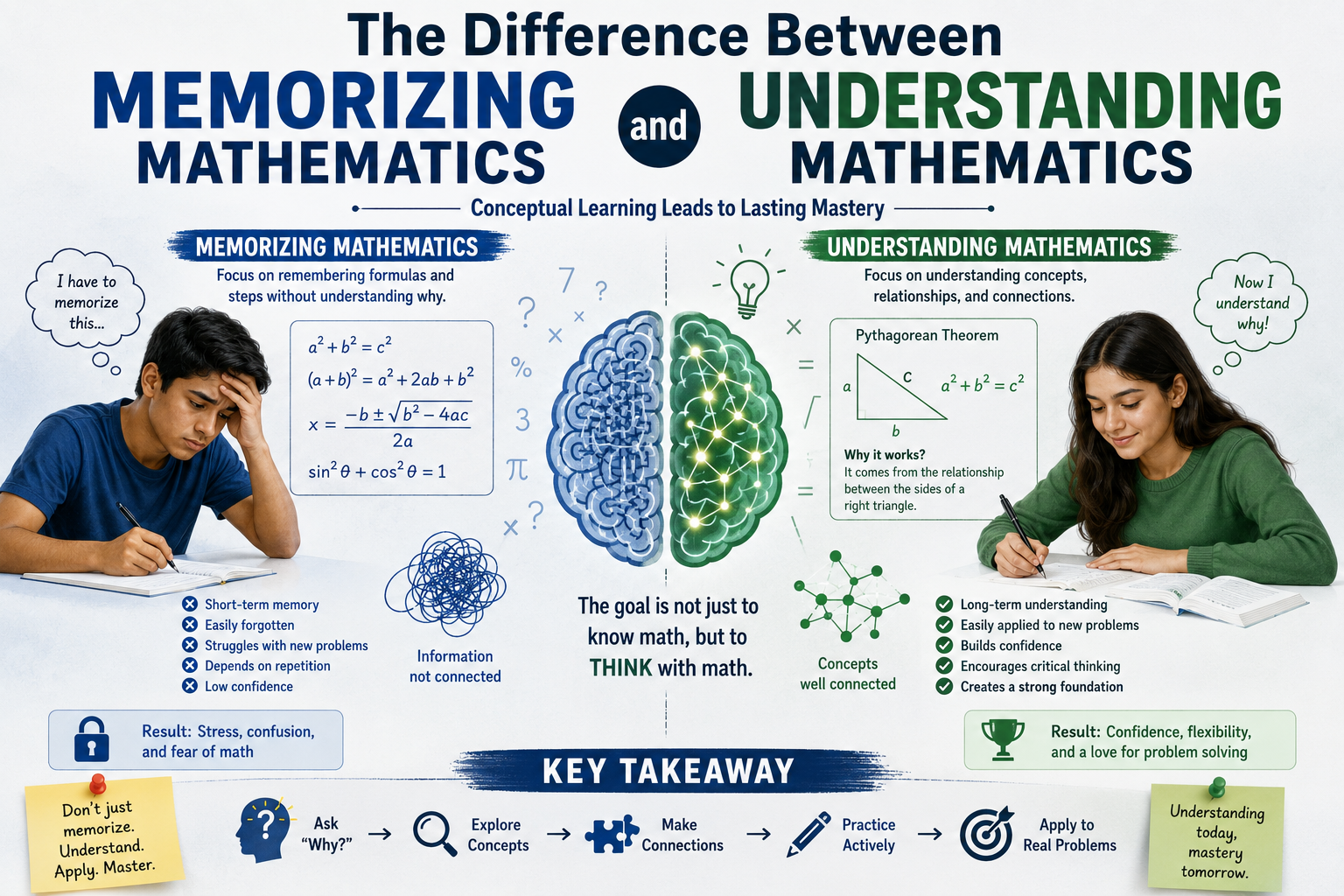
Mathematics is often viewed as a subject of formulas, rules, numbers, and calculations. Many students prepare for examinations by memorizing formulas, remembering solved examples, and repeating similar questions. While memorization can sometimes help students achieve quick results, the real power of mathematics lies in the ability to understand concepts and apply them in different situations. Therefore, the difference between memorizing mathematics and understanding mathematics is closely connected with long-term learning, logical thinking, and problem-solving skills.
What Does Memorizing Mathematics Mean?
Memorizing mathematics means remembering a formula, rule, procedure, or answer without fully understanding its meaning or reason. For example, a student may memorize the formula for the area of a rectangle: length × breadth. If the length and breadth are given directly in an examination, the student can easily calculate the answer. However, if the question is presented differently or connected to a real-life situation, the student may struggle to apply the same knowledge.
Memorization can be useful when preparing for examinations within a limited period. Students need to remember basic formulas, mathematical symbols, rules, and certain procedures. However, depending only on memorization can make it difficult to answer questions such as “Why does this formula work?” or “How can I use it in a new situation?” As a result, mathematics may appear to be a difficult subject that requires endless memorization rather than a subject that encourages thinking.
What Does Understanding Mathematics Mean?
Understanding mathematics means more than remembering a formula. It means understanding its meaning, reasoning, relationships, and applications. For example, instead of simply memorizing the formula for the area of a triangle, a student who understands the concept can explain how the formula is related to the base and height of the triangle.
Conceptual learning encourages students to understand the structure of a problem. Instead of asking only for the answer, they begin to ask questions such as: “Why should I use this formula?”, “What happens if one value changes?”, and “Can I solve this problem in another way?” This process develops genuine mathematical thinking.
The Main Difference Between Memorization and Understanding
A student who relies mainly on memorization may perform well when the question looks familiar. However, when the format of the question changes, the student may become confused. In contrast, a student who understands the underlying concept can apply previously learned knowledge to unfamiliar problems.
For example, a student may memorize how to calculate 10 percent of 200. But a real-life problem involving a 15 percent discount, additional tax, or comparison between two discounts may require deeper understanding. A student who understands the meaning of percentages can analyze such problems step by step instead of simply searching for a memorized formula.
Therefore, memorization teaches students how to produce an answer, while understanding teaches them how to think.
Why Is Conceptual Learning Important?
Conceptual learning connects mathematics with everyday life. Mathematics is not limited to classrooms and examinations. It is used when preparing a budget, calculating interest, comparing distance and time, interpreting statistics, and solving scientific and technological problems.
Once students understand a concept, they can use it as a foundation for learning new concepts. Mathematical ideas are interconnected. For example, fractions, decimals, percentages, and ratios may appear to be separate topics, but they are closely related. A student who understands these relationships can learn new mathematical ideas more effectively.
Conceptual understanding also improves confidence. When students know why a method works, they are less dependent on memorized steps and more willing to attempt challenging problems.
Analysis of the Current Situation
In the present educational environment, examination pressure, limited study time, and competition for high marks often encourage students to focus on questions such as “Which formulas should I memorize?” and “What should I study for the examination?” In some classrooms, teaching may also focus heavily on obtaining the correct answer and following a particular procedure. This can reduce opportunities for students to explore the deeper meaning of mathematics.
However, modern education is increasingly emphasizing skill-based and student-centered learning. Problem-solving, logical reasoning, critical thinking, mathematical communication, and the ability to connect mathematics with real-world situations are becoming increasingly important. This shift demonstrates the need to move from purely memorization-based learning toward conceptual understanding.
Technology is also changing mathematics education. Artificial intelligence (AI), online classes, educational applications, and digital learning resources can provide solutions to mathematical problems within seconds. These technologies can make learning more accessible, but they also create challenges. If students simply copy answers from AI tools or calculators, their independent mathematical reasoning may become weaker. Therefore, modern technology should be used as a learning assistant that helps students understand concepts and check their reasoning, rather than as a replacement for thinking.
How Can Students Move From Memorization to Understanding?
Students should try to understand the meaning and origin of every important formula they learn. They should ask, “Why does this formula work?” and “When should I use it?” Whenever possible, they should solve the same problem using different methods. Connecting mathematical ideas to real-life examples can also make learning more meaningful.
Students should also learn from mistakes. Instead of simply looking at the correct answer after making an error, they should identify where their reasoning went wrong. Was the concept misunderstood? Was the calculation incorrect? Was the wrong formula used? This type of reflection can gradually strengthen mathematical understanding.
Teachers also have an important role. Rather than simply giving answers, teachers can encourage students to ask questions, make predictions, discuss different approaches, and explain their reasoning. This can transform the classroom from a place where formulas are memorized into a place where students think, explore, and discover.
Conclusion
Memorizing mathematics is not completely wrong. Students need to remember certain basic formulas, rules, facts, and procedures. However, memorization should not be the final goal of mathematics education. Memorization provides information, but understanding provides the power to use that knowledge.
In today’s rapidly changing educational and technological environment, students need more than the ability to produce correct answers in examinations. They need to identify problems, reason logically, explore solutions, adapt their knowledge to new situations, and clearly explain their conclusions.
Therefore, the true purpose of mathematics education is not simply to remember formulas. It is to understand the ideas behind those formulas, apply them to unfamiliar situations, and develop the ability to think logically through mathematics. This is the essential journey from memorizing mathematics to truly understanding it.
नेपालीमा
गणित कण्ठ गर्नु र गणित बुझ्नुबीचको अन्तर
गणितलाई प्रायः सूत्र, नियम र अंकहरूको विषयका रूपमा बुझिन्छ। धेरै विद्यार्थीले परीक्षामा राम्रो अंक ल्याउन सूत्रहरू कण्ठ गर्ने, उदाहरणहरू सम्झने र अभ्यासका प्रश्नहरू दोहोर्याउने गर्छन्। कण्ठ गर्ने अभ्यासले केही अवस्थामा तत्कालीन परिणाम दिन सक्छ, तर गणितको वास्तविक शक्ति त्यसलाई बुझेर प्रयोग गर्न सक्ने क्षमतामा हुन्छ। त्यसैले “गणित कण्ठ गर्नु” र “गणित बुझ्नु” बीचको अन्तर विद्यार्थीको दीर्घकालीन सिकाइ, तार्किक सोच र समस्या समाधान गर्ने क्षमतासँग प्रत्यक्ष जोडिएको विषय हो।
गणित कण्ठ गर्नु भनेको के हो?
गणित कण्ठ गर्नु भन्नाले कुनै सूत्र, नियम, प्रक्रिया वा उत्तरलाई त्यसको अर्थ र कारण नबुझी सम्झनु हो। उदाहरणका लागि, विद्यार्थीले क्षेत्रफलको सूत्र “लम्बाइ × चौडाइ” कण्ठ गर्न सक्छ। परीक्षामा आयतको लम्बाइ र चौडाइ दिइएमा उसले सजिलै उत्तर निकाल्न सक्छ। तर प्रश्नको स्वरूप परिवर्तन भयो वा वास्तविक जीवनसँग सम्बन्धित समस्या आयो भने केवल कण्ठ गरेको ज्ञान प्रयोग गर्न कठिन हुन सक्छ।
कण्ठ गर्ने तरिका छोटो समयमा परीक्षा तयारी गर्न उपयोगी हुन सक्छ। विशेषगरी सूत्र, गणितीय संकेत, आधारभूत तथ्य तथा केही प्रक्रियाहरू सम्झन आवश्यक हुन्छ। तर कण्ठमा मात्र निर्भर हुँदा विद्यार्थीले “किन?” र “कसरी?” भन्ने प्रश्नको उत्तर दिन नसक्ने सम्भावना हुन्छ। यसले गणितलाई बुझ्नुपर्ने विषयको सट्टा डर लाग्दो र कठिन विषयका रूपमा प्रस्तुत गर्न सक्छ।
गणित बुझ्नु भनेको के हो?
गणित बुझ्नु भनेको सूत्र वा नियम मात्र सम्झनु होइन, त्यसको अर्थ, कारण, सम्बन्ध र प्रयोग बुझ्नु हो। उदाहरणका लागि, विद्यार्थीले त्रिभुजको क्षेत्रफलको सूत्र कण्ठ गर्नुको सट्टा त्यसलाई आधार र उचाइको सम्बन्धबाट कसरी प्राप्त गरिन्छ भन्ने बुझ्यो भने उसले सूत्रलाई विभिन्न परिस्थितिमा प्रयोग गर्न सक्छ।
अवधारणात्मक सिकाइमा विद्यार्थीले एउटा प्रश्नको उत्तर मात्र खोज्दैन; उसले समस्याको संरचना बुझ्छ। उसले “यो सूत्र किन प्रयोग गर्ने?”, “यदि एउटा मान परिवर्तन भयो भने के हुन्छ?”, “अर्को तरिकाबाट पनि समाधान गर्न सकिन्छ कि सकिँदैन?” जस्ता प्रश्न गर्छ। यही प्रक्रियाले गणितीय सोच विकास गर्छ।
कण्ठ र बुझाइबीच मुख्य अन्तर
कण्ठ गर्ने विद्यार्थीले प्रायः परिचित प्रश्नमा राम्रो प्रदर्शन गर्न सक्छ। तर प्रश्नको ढाँचा परिवर्तन हुँदा ऊ अलमलिन सक्छ। यसको विपरीत, अवधारणा बुझेको विद्यार्थीले नयाँ प्रकारको प्रश्न आए पनि पहिले सिकेको ज्ञानलाई नयाँ परिस्थितिमा प्रयोग गर्न सक्छ।
उदाहरणका लागि, विद्यार्थीले प्रतिशतको सूत्र कण्ठ गरेको छ भने “२०० को १० प्रतिशत कति?” भन्ने प्रश्न सजिलै समाधान गर्न सक्छ। तर पसलमा १५ प्रतिशत छुट, त्यसपछि कर थपिएको मूल्य वा दुई फरक छुटको तुलना गर्नुपर्ने समस्या आयो भने केवल सूत्र कण्ठ गरेको ज्ञान पर्याप्त नहुन सक्छ। प्रतिशतको वास्तविक अर्थ बुझेको विद्यार्थीले भने त्यस्ता परिस्थितिलाई चरणबद्ध रूपमा विश्लेषण गर्न सक्छ।
त्यसैले कण्ठले उत्तर दिन सिकाउँछ भने बुझाइले सोच्न सिकाउँछ।
अवधारणात्मक सिकाइ किन आवश्यक छ?
अवधारणात्मक सिकाइले गणितलाई जीवनसँग जोड्छ। गणित केवल कक्षाकोठा वा परीक्षाका लागि होइन; बजेट बनाउने, ब्याज गणना गर्ने, दूरी र समय तुलना गर्ने, तथ्याङ्क बुझ्ने तथा वैज्ञानिक र प्राविधिक समस्याहरू समाधान गर्ने क्रममा पनि प्रयोग हुन्छ।
अवधारणा बुझेपछि विद्यार्थीले नयाँ ज्ञान सजिलै निर्माण गर्न सक्छ। एउटा अवधारणा अर्को अवधारणासँग जोडिन्छ। उदाहरणका लागि, भिन्न, दशमलव, प्रतिशत र अनुपात अलग-अलग विषयजस्तो देखिए पनि तिनीहरूबीच गहिरो सम्बन्ध छ। सम्बन्ध बुझ्ने विद्यार्थीले नयाँ विषय सिक्दा पुरानो ज्ञानलाई आधार बनाउन सक्छ।
वर्तमान शिक्षण अवस्थाको विश्लेषण
वर्तमान समयमा शिक्षा प्रणालीमा परीक्षाको दबाब, सीमित समय र उच्च अंक प्राप्त गर्ने प्रतिस्पर्धाका कारण धेरै विद्यार्थी अझै पनि “कति पढ्ने?” र “कुन सूत्र कण्ठ गर्ने?” भन्ने प्रश्नमा केन्द्रित हुन्छन्। कतिपय अवस्थामा शिक्षण पनि सही उत्तर र निश्चित प्रक्रियामा बढी केन्द्रित हुँदा विद्यार्थीले गणितको गहिरो अर्थ बुझ्ने अवसर कम पाउन सक्छन्।
तर अहिले शिक्षामा सीपमा आधारित र विद्यार्थी–केन्द्रित सिकाइ माथि जोड बढिरहेको छ। गणितमा समस्या समाधान, तार्किक तर्क, आलोचनात्मक सोच, सञ्चार र वास्तविक जीवनका समस्यासँग सम्बन्ध स्थापित गर्ने क्षमतालाई महत्त्व दिन थालिएको छ। यसले कण्ठमुखी शिक्षाबाट अवधारणात्मक शिक्षातर्फ परिवर्तनको आवश्यकता देखाउँछ।
त्यसैगरी, कृत्रिम बुद्धिमत्ता (AI), अनलाइन कक्षा र डिजिटल सिकाइ सामग्री ले गणित अध्ययनको तरिका पनि परिवर्तन गरिरहेका छन्। विद्यार्थीले कुनै पनि सूत्र वा समस्याको समाधान केही सेकेन्डमै प्राप्त गर्न सक्छ। यसले सिकाइलाई सजिलो बनाउन सक्छ, तर चुनौती पनि सिर्जना गर्छ। यदि विद्यार्थीले AI वा क्याल्कुलेटरबाट आएको उत्तर मात्र स्वीकार गर्छ भने उसको आफ्नै गणितीय सोच कमजोर हुन सक्छ। त्यसैले आधुनिक प्रविधिलाई उत्तर प्राप्त गर्ने साधनभन्दा अवधारणा बुझ्ने र आफ्नो सोच जाँच्ने सहायकका रूपमा प्रयोग गर्नु उचित हुन्छ।
कसरी कण्ठभन्दा बुझाइमा जाने?
विद्यार्थीले कुनै सूत्र पढ्दा त्यसको अर्थ र उत्पत्ति बुझ्ने प्रयास गर्नुपर्छ। “यो सूत्र किन काम गर्छ?” भनेर प्रश्न गर्नुपर्छ। एउटै प्रश्नलाई सम्भव भएसम्म फरक–फरक तरिकाबाट समाधान गर्नुपर्छ। वास्तविक जीवनका उदाहरणसँग गणित जोड्नुपर्छ। गलत उत्तर आएपछि समाधान हेरेर मात्र अगाडि बढ्नुको सट्टा गल्ती कहाँ भयो भनेर पत्ता लगाउनुपर्छ।
शिक्षकले पनि केवल उत्तर बताउनेभन्दा विद्यार्थीलाई प्रश्न गर्ने, अनुमान गर्न लगाउने, छलफल गराउने र आफ्नै तरिकाले समाधान प्रस्तुत गर्न प्रोत्साहित गर्नुपर्छ। यसले कक्षाकोठालाई सूत्र सम्झने स्थानभन्दा सोच्ने र खोज्ने स्थान बनाउँछ।
निष्कर्ष
गणित कण्ठ गर्नु पूर्ण रूपमा गलत होइन। केही आधारभूत सूत्र, नियम र तथ्य सम्झनु आवश्यक हुन्छ। तर कण्ठलाई गणित सिकाइको अन्तिम लक्ष्य बनाउनु उचित हुँदैन। कण्ठले जानकारी दिन्छ, तर बुझाइले ज्ञानलाई प्रयोग गर्ने शक्ति दिन्छ।
आजको बदलिँदो शैक्षिक र प्रविधिमैत्री संसारमा विद्यार्थीलाई केवल परीक्षामा सही उत्तर निकाल्ने होइन, नयाँ समस्या पहिचान गर्ने, तर्क गर्ने, समाधान खोज्ने र आफ्नो निष्कर्ष स्पष्ट रूपमा प्रस्तुत गर्ने क्षमता आवश्यक छ। त्यसैले गणित शिक्षाको वास्तविक उद्देश्य सूत्र सम्झनु मात्र होइन—सूत्रको पछाडिको सोच बुझ्नु, त्यसलाई नयाँ परिस्थितिमा प्रयोग गर्नु र गणितमार्फत तार्किक रूपमा सोच्न सिक्नु हो। यही नै कण्ठमुखी सिकाइबाट वास्तविक गणितीय समझतर्फको यात्रा हो।